Door Supervisor vs Security Guard: Which Course Is Right for You?
- Published at
Choosing the right SIA qualification is one of the first decisions anyone entering the private security industry has to make. Many new learners compare door supervisor vs security guard because both licences allow you to work in frontline security, but they are designed for different environments and responsibilities.
Although the two roles share some common skills, such as observation, communication and protecting people or property, there are important differences in where you can work, what duties you perform and the type of training you receive.
If you’re still deciding which course suits your career goals, this guide compares both qualifications in detail to help you make an informed decision.
If you already know you want to work in licensed venues, pubs, clubs or events, our SIA Door Supervisor Course is designed to prepare learners for those frontline roles. If you’re new to the licensing process, you may also find our guide on how to get an SIA licence useful before choosing a course.
Door Supervisor vs Security Guard at a Glance
| Feature | Door Supervisor | Security Guard |
|---|---|---|
| Licence Required | Door Supervisor Licence | Security Guard Licence |
| Main Workplace | Licensed premises, events, entertainment venues | Offices, warehouses, retail, construction sites |
| Physical Intervention Training | Yes | No |
| Conflict Management | Extensive | Basic |
| Customer Interaction | High | Moderate |
| Patrol Duties | Yes | Yes |
| Access Control | Yes | Yes |
| Emergency Response | Yes | Yes |
| Career Flexibility | Higher | Moderate |
While both qualifications provide access to security careers, the Door Supervisor licence generally offers broader employment opportunities because it covers additional responsibilities.
What Does a Door Supervisor Do?
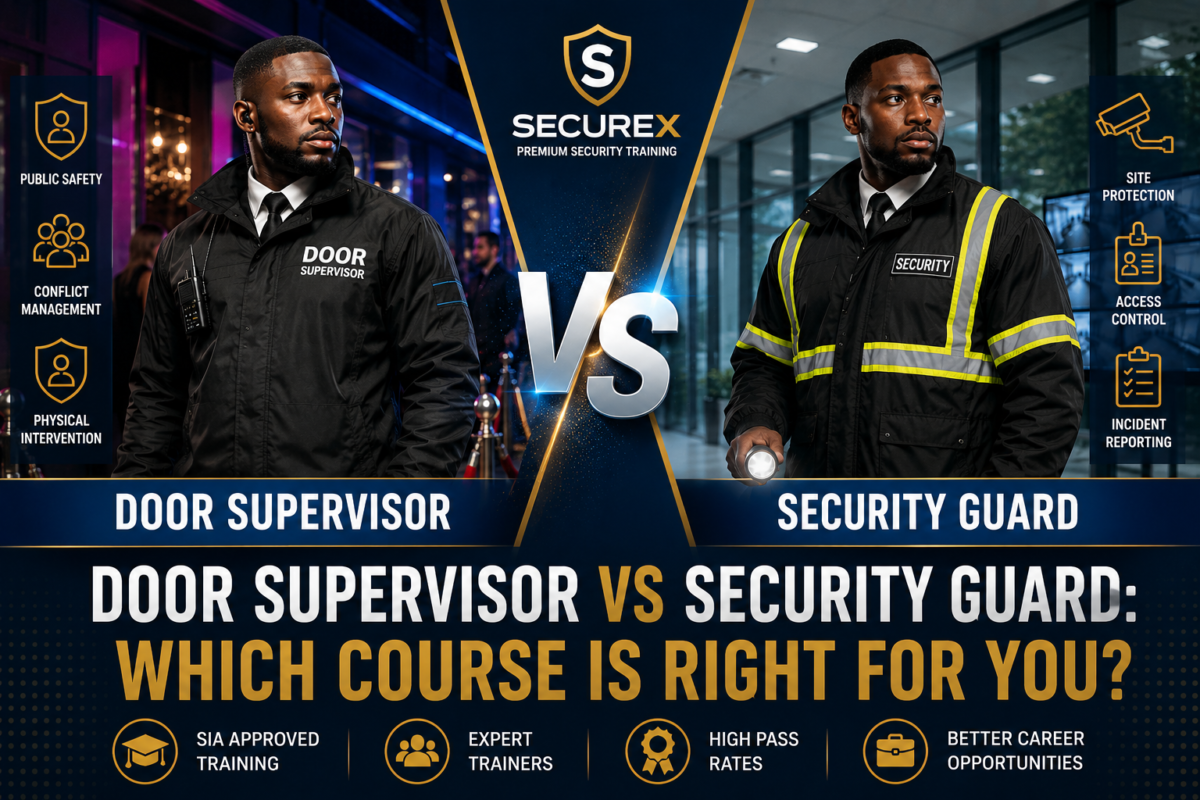
A Door Supervisor is responsible for protecting people, property and licensed premises while maintaining a safe environment for customers and staff.
Typical duties include:
- Controlling entry to venues
- Checking identification
- Preventing disorder
- Managing queues
- Monitoring customer behaviour
- Responding to incidents
- Completing incident reports
- Supporting emergency evacuations
- Providing customer assistance
- Using conflict-management techniques
Many Door Supervisors work in:
- Nightclubs
- Bars
- Pubs
- Concert venues
- Sporting events
- Festivals
- Hotels
- Casinos
- Entertainment venues
Because the role often involves dealing with members of the public in busy environments, communication and conflict management form a significant part of the training. You can learn more about these responsibilities in our Door Supervisor duties and responsibilities guide.
What Does a Security Guard Do?
A Security Guard focuses primarily on protecting property, assets and people rather than managing licensed venues.
Typical responsibilities include:
- Patrolling buildings
- Monitoring CCTV systems
- Controlling site access
- Checking visitors
- Locking and unlocking premises
- Responding to alarms
- Reporting suspicious activity
- Protecting company property
- Monitoring fire and safety risks
Security Guards commonly work in:
- Office buildings
- Warehouses
- Shopping centres
- Construction sites
- Factories
- Industrial premises
- Schools
- Hospitals
- Business parks
The role usually involves fewer confrontational situations than Door Supervisor work, although good communication and observation skills remain essential.
The Biggest Difference Between the Two Roles
The most significant difference when comparing door supervisor vs security guard is where you are legally permitted to work.
A Door Supervisor licence allows holders to work in licensed premises where alcohol is sold and where security staff may need to use physical intervention if necessary and lawful.
A Security Guard licence does not cover this type of work. Instead, it is intended for guarding property, monitoring premises and protecting assets in non-licensed environments.
Because of this, many employers advertise more vacancies for Door Supervisors across hospitality, leisure and event security.
For learners looking for greater flexibility, the Door Supervisor qualification is often considered the broader option.
Door Supervisor Course vs Security Guard Course
Although both qualifications are recognised by the Security Industry Authority (SIA), the content of each course reflects the different responsibilities of the two roles.
A Door Supervisor Course includes additional training because Door Supervisors are more likely to work in busy public environments where conflict and customer interaction occur regularly.
Typical topics include:
- Working within the private security industry
- Working as a Door Supervisor
- Conflict management
- Physical intervention skills
- Emergency procedures
- Customer service
- Communication skills
- Searching procedures
- Incident reporting
- Venue security
Our Door Supervisor Course combines classroom learning with practical exercises to prepare learners for real working situations.
By comparison, the Security Guard Course focuses more heavily on protecting property and premises.
Training usually covers:
- Patrolling sites
- Access control
- Health and safety
- Fire procedures
- Emergency response
- Recording incidents
- Site security
- Communication
- Observation skills
Because Security Guards are not licensed to work in many licensed venues, physical intervention training is not normally included.
Physical Intervention Is a Major Difference
One of the biggest differences between the two qualifications is physical intervention training.
Door Supervisor learners receive practical instruction covering:
- Safe restraint principles
- Breakaway techniques
- Risk awareness
- Legal responsibilities
- Proportionate use of force
- Protecting vulnerable people
These sessions are carefully supervised and assessed.
Security Guard training does not include physical intervention because the role is generally based around observation, prevention and reporting rather than physically managing customers.
If you expect to work in pubs, clubs, entertainment venues or events, the Door Supervisor qualification is normally the more appropriate choice.
Where Can Each Licence Holder Work?
Both licences open the door to rewarding careers, but the work environments are quite different.
Door Supervisor
Typical workplaces include:
- Nightclubs
- Bars
- Pubs
- Hotels
- Casinos
- Music venues
- Festivals
- Sporting events
- Private functions
- Licensed entertainment venues
Security Guard
Typical workplaces include:
- Office buildings
- Warehouses
- Distribution centres
- Construction sites
- Retail parks
- Shopping centres
- Schools
- Hospitals
- Factories
- Industrial estates
If you’re looking for a role involving customer interaction and varied environments, Door Supervisor work often provides more variety.
Which Licence Gives You More Job Opportunities?
For many new learners, this is the deciding factor.
Although both qualifications are valuable, the Door Supervisor licence generally offers broader employment opportunities.
Because it covers additional responsibilities, many employers recruiting for licensed venues specifically require Door Supervisor licence holders.
The qualification may also allow you to work in many environments where a Security Guard licence alone would not be sufficient.
This flexibility means Door Supervisors can often apply for positions involving:
- Event security
- Hospitality security
- Retail security
- Hotel security
- Corporate reception security
- Entertainment venues
- Festivals
- Licensed premises
As your experience grows, you can also progress into supervisory positions. Our guide on Door Supervisor duties and responsibilities explains how these responsibilities develop throughout a security career.
Skills Required for Each Role
Both careers require professionalism, but employers often place different emphasis on particular skills.
Door Supervisor
- Excellent communication
- Conflict management
- Customer service
- Confidence under pressure
- Decision-making
- Teamwork
- Physical awareness
- Professional appearance
Security Guard
- Observation
- Patrolling
- Attention to detail
- Reliability
- Report writing
- Monitoring CCTV
- Time management
- Independent working
Whichever route you choose, employers value people who remain calm, communicate clearly and demonstrate professionalism at all times.
Door Supervisor vs Security Guard Salary
Earnings vary depending on employer, location, experience, shift patterns and the type of contract.
Generally:
Door Supervisors often receive higher hourly rates for evening, weekend and event work because the role involves greater public interaction and additional responsibilities.
Security Guards usually work more regular shifts in offices, warehouses, industrial sites and commercial premises, providing greater consistency for some workers.
Rather than focusing only on salary, it’s worth considering:
- Working hours
- Shift patterns
- Career progression
- Workplace environment
- Job variety
- Long-term opportunities
If you’re aiming to maximise flexibility, the Door Supervisor route is often the stronger long-term investment.
Which Course Should You Choose?
Choose the Door Supervisor Course if you want to:
- Work in licensed premises
- Work at events and festivals
- Develop conflict-management skills
- Learn physical intervention
- Access a wider range of security jobs
- Build long-term career flexibility
The Door Supervisor Course is usually the preferred option for learners entering the industry because it prepares them for a broader range of frontline security roles.
Choose the Security Guard Course if you want to:
- Protect commercial premises
- Patrol offices or warehouses
- Work in industrial environments
- Focus on property protection
- Avoid hospitality or nightlife security
If you’re still comparing training options, our overview of SIA Security Training Courses explains the different qualifications available and who each course is designed for.
Many learners also choose the Door Supervisor Course with Emergency First Aid, as it combines both qualifications into one convenient training package before starting the SIA licence application process.
Frequently Asked Questions
Can a Door Supervisor do Security Guard work?
In many situations, a Door Supervisor licence provides greater flexibility because it covers a broader range of frontline security duties. However, you should always ensure that the work you undertake matches the conditions of your licence and the role you have been employed to perform.
Is the Door Supervisor Course more difficult?
Not necessarily. The course includes additional units, particularly conflict management and physical intervention, so there is more practical learning than on the Security Guard Course. With regular attendance and participation, most learners successfully complete the assessments.
Which course is better for beginners?
For many people entering the private security industry, the Door Supervisor Course is often the better starting point because it opens the door to a wider variety of security roles and career opportunities.
If your goal is to work in hospitality, retail security, events or licensed premises, the Door Supervisor qualification is usually the recommended option.
Do both courses require an SIA licence?
Yes.
Completing either course does not automatically give you permission to work. After successfully passing your qualification, you must apply for the appropriate SIA licence before undertaking licensable frontline security work.
If you’re unfamiliar with the process, read our complete guide on how to get an SIA licence.
Is first aid included?
Some Door Supervisor courses require learners to hold an Emergency First Aid at Work qualification before attending.
SecureX Premium offers a combined Door Supervisor and Emergency First Aid Course, making it easier for learners to complete both requirements together.
Can I progress into management after becoming a Door Supervisor?
Yes.
Many experienced Door Supervisors progress into positions such as:
- Head Door Supervisor
- Security Supervisor
- Event Security Supervisor
- Operations Manager
- Venue Security Manager
- CCTV Operator
- Contract Manager
Building experience, maintaining professional standards and completing refresher training can all support career progression over time.
Making the Right Choice
When comparing door supervisor vs security guard, there isn’t a single answer that suits everyone. The right course depends on the type of security work you want to do, the environments you enjoy working in and your long-term career ambitions.
If you prefer protecting commercial buildings, warehouses or office premises with a focus on observation, patrols and access control, the Security Guard qualification may be the right fit.
However, if you want greater flexibility, wider employment opportunities and the ability to work in licensed venues, hospitality, entertainment and event security, the Door Supervisor qualification is often the stronger option. The additional training in conflict management and physical intervention prepares learners for a broader range of frontline responsibilities.
At SecureX Premium, we provide professionally delivered SIA Door Supervisor Courses to help learners gain the knowledge and practical skills needed for a successful career in the private security industry. You can also browse all available SIA training courses or explore our Door Supervisor Licence Guide to learn more about the licensing process before booking your training.
Latest Post