Security Guard Night Shift: Duties, Preparation and Practical Tips
- Published at
Working a night shift as a security guard can feel very different from working during the day. A busy reception area may quieten down, fewer colleagues may be on site, and you may need to manage access, carry out patrols, and respond to unexpected events overnight.
The exact duties depend on the workplace, your role and the employer’s instructions. A warehouse, office building and residential development will each have different risks and procedures. This guide explains what to expect, how to prepare and how to approach your shift professionally.
If you are entering the industry, start with our Security Guard Licence guide to understand the training and licensing route for your intended role.
What Does a Security Guard Do on a Night Shift?
Night security work usually involves protecting premises, monitoring activity and recording anything that needs attention. Even on a quiet site, you still need consistent observation and communication.
Your responsibilities should be explained through your site induction, assignment instructions and shift briefing.
| Common duty | What it may involve |
|---|---|
| Access control | Checking whether visitors, staff or contractors are authorised to enter |
| Patrols | Inspecting assigned areas according to the site’s patrol procedure |
| Monitoring | Observing approved CCTV systems, alarms or other equipment where this forms part of your role |
| Safety observations | Reporting damaged doors, leaks, obstructions or other hazards |
| Communication | Maintaining contact with colleagues, supervisors or a control room |
| Record keeping | Completing logs, incident reports and the end-of-shift handover |
Do not assume that every night security role includes all these duties. Use only the systems and equipment you are authorised and trained to operate.
Our guide to what security guards can and cannot do explains why understanding your role’s limits matters as much as knowing your responsibilities.
How to Prepare Before Your Night Shift
Good preparation starts before you arrive. Confirm your shift time, location, reporting contact and any instructions for entering the site after normal opening hours.
For a first assignment, ask what uniform and documents you should bring. Check how you will travel home when the shift ends, particularly if public transport operates less frequently overnight.
Useful preparations include:
- Allowing suitable time to rest before work.
- Planning meals, drinks and agreed breaks.
- Bringing the required uniform and suitable footwear.
- Checking the weather if the assignment includes outdoor duties.
- Confirming where to report and who will provide your briefing.
- Carrying any documents the employer has asked you to bring.
If you feel too tired or unwell to carry out your duties safely, raise this with your supervisor. Report the concern promptly so the employer can address it through its procedures.
If you’re still looking for a role, our Security Guard Interview Questions article can help you prepare questions about shift patterns, site induction, and support arrangements.
Take a Proper Handover Before Starting
A handover helps you understand what happened before you arrived and what needs attention during your shift.
Read the relevant records and ask the outgoing officer or supervisor about unresolved issues. Don’t rely on a quick comment like “everything is fine” when there are logs or instructions to review.
Before taking over, confirm:
- Whether any incidents remain unresolved.
- Which staff, visitors or contractors are expected overnight.
- Whether equipment faults have been reported.
- Whether any areas are closed or subject to special instructions.
- Who to contact for routine concerns and urgent assistance.
- How issued keys, radios and other equipment are transferred.
For example, if a door fault has already been reported, you need to know which temporary arrangements apply and who is responsible for following it up. You should not improvise your own solution without authorisation.
Make sure you understand the instructions before the outgoing colleague leaves.
Carry Out Patrols According to Site Procedures
A patrol gives you an opportunity to check assigned areas and identify changes that may need attention. Follow the site’s instructions, including any restrictions, communication requirements, and reporting arrangements.
Depending on the assignment, observations may include damaged access points, water leaks, unusual activity or obstructions affecting designated routes.
Record what you actually observe. “Water visible on the floor outside the ground-floor storeroom at 02:15” is clearer than “the building has a plumbing problem”, which assumes a cause you may not know.
Do not enter an unsafe area or investigate a potentially dangerous situation alone. Follow the site’s escalation procedure and request appropriate support.
Treat patrol schedules and security arrangements as confidential workplace information. Do not share them publicly or discuss them with unauthorised people.
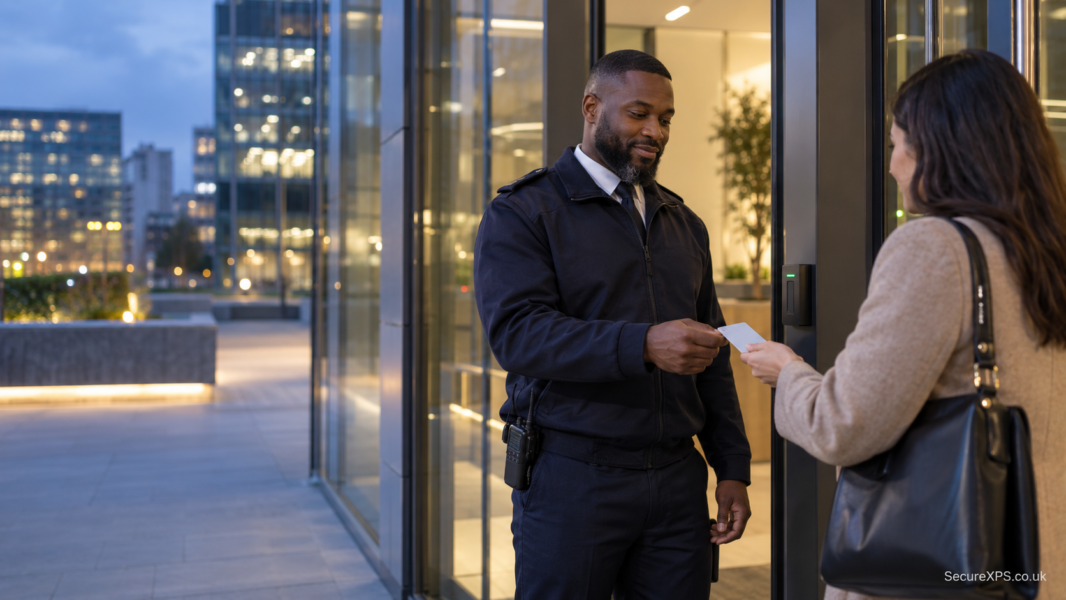
Manage Overnight Visitors and Access Calmly
Night shifts can involve legitimate arrivals outside ordinary business hours. These might include cleaners, delivery drivers, maintenance contractors or staff working late.
Follow the approved access process rather than assuming that someone is authorised because they recognise the building or say they have visited before.
Where required, check their details against the relevant authorisation and contact the designated person if anything is unclear. Protect visitor records and other personal information according to workplace procedures.
If somebody becomes frustrated, explain the process calmly:
“I need to confirm your authorisation before I can let you through. I’ll contact the designated person to check.”
Keep your language respectful and avoid making promises you cannot fulfil. If the situation escalates, seek support through the agreed procedure.
Our Conflict Management for Security Workers guide covers communication, de-escalation, and recognising when you need assistance.
Stay in Contact and Report Equipment Problems
Reliable communication is particularly important when fewer people are present on site.
Before starting your duties, check that issued communication equipment works and that you know how to contact the relevant supervisor or control room. Understand any scheduled check-ins and what to do if contact is lost.
If your assignment involves lone working, confirm the employer’s arrangements for support and escalation. Do not assume that carrying a personal mobile phone adequately replaces the required workplace system.
Report faulty radios, missing equipment or unreliable alarms promptly. Record the issue where required and follow the authorised instructions you receive.
Avoid using personal devices in ways that distract you from your duties or expose confidential information.
Keep Clear Logs and Incident Reports
Accurate records help the next officer, supervisor and other authorised staff understand what happened overnight.
Routine logs and incident reports serve different purposes. A log may record a scheduled check, while an incident report gives a fuller account of a particular event.
For either record:
- Use the correct date and time.
- Describe events in a clear order.
- Distinguish your observations from information supplied by others.
- Record the actions you took and who you contacted.
- Identify any unresolved matter that needs follow-up.
- Follow the employer’s rules for storing and sharing records.
A useful entry might read:
“At 01:40, a delivery driver arrived at reception. Their name was not on the overnight delivery list. I contacted the duty manager and kept the driver outside the restricted area while authorisation was checked.”
This explains the event and your response without adding assumptions about the driver’s intentions.
For a fuller structure and worked example, see our Security Incident Report Writing guide.
Finish With a Clear End-of-Shift Handover
Before leaving, complete the required records and explain anything the incoming officer needs to know.
Highlight unresolved incidents, equipment problems, expected arrivals and any instructions that remain in effect. Transfer issued items through the correct process and make sure outstanding responsibilities are understood.
Do not assume that writing something in a log guarantees the next person will notice it. Draw attention to important matters during the handover.
Follow the site’s arrangements if your replacement is delayed. Contact the designated supervisor rather than leaving without resolving who is responsible for the assignment.
Questions to Ask Before Accepting a Night Security Role
A job description may not explain every practical detail. Asking clear questions helps you understand the assignment before accepting it.
Useful questions include:
- What are the shift times and rotation pattern?
- Will I work alone or as part of a team?
- What induction will I receive?
- How are breaks and cover arranged?
- Who provides support overnight?
- What equipment and uniform are supplied?
- Are outdoor patrols part of the role?
- What reporting systems will I use?
If you are preparing applications, our Security Guard CV Examples and Writing Tips can help you describe relevant experience accurately.
Frequently Asked Questions
Are security guard night shifts always quiet?
No. Activity depends on the site. Some workplaces have overnight deliveries, staff movements or regular public contact. Even on a quieter assignment, you must continue following monitoring, patrol and reporting procedures.
Do all night security guards work alone?
No. Some assignments involve a team, while others involve lone working. Confirm the staffing and support arrangements with the employer before starting.
What should I bring to a security guard night shift?
Bring the uniform, documents and personal items your employer has requested. Confirm what equipment is supplied and avoid bringing unauthorised security equipment.
What should I do if I find a problem during a patrol?
Follow the site’s instructions, report the concern and record your observations. If there is immediate danger, use the emergency procedure and seek appropriate assistance.
Is a night shift suitable for a new security guard?
That depends on the assignment, induction and support available. Be honest about your experience and ask how the employer prepares new officers for their duties.
Where can I learn about starting a security career?
Read our How to Become a Security Guard in the UK guide and explore Securex’s training courses. If you need help choosing a suitable training route, contact Securex before booking.