
SIA Door Supervisor as a Security Officer Career: Professional Growth and Future Prospects

- Published at
SIA DOOR SUPERVISOR · SIA LICENSED · CAREER PATHWAY-Securex Premium
SIA Door Supervisor as a Security Officer Career: Professional Growth and Future Prospects
Thousands of professionals across the United Kingdom begin their security careers as SIA-licensed Door Supervisors every year. Yet many do not realise at the outset that the role is not a ceiling — it is a launchpad. The skills cultivated on the door: conflict resolution, situational awareness, emergency response, and professional composure under pressure, translate directly into high-value competencies sought at every level of the private security industry and beyond.
In this guide, we explore the full arc of the Door Supervisor career: what the SIA licence means, the realistic trajectory of professional growth, the specialisations available, and the future prospects awaiting those who commit to developing their careers with purpose.
“The door is the first classroom. The rest of the industry is the degree.”
Understanding the SIA Door Supervisor Security Licence
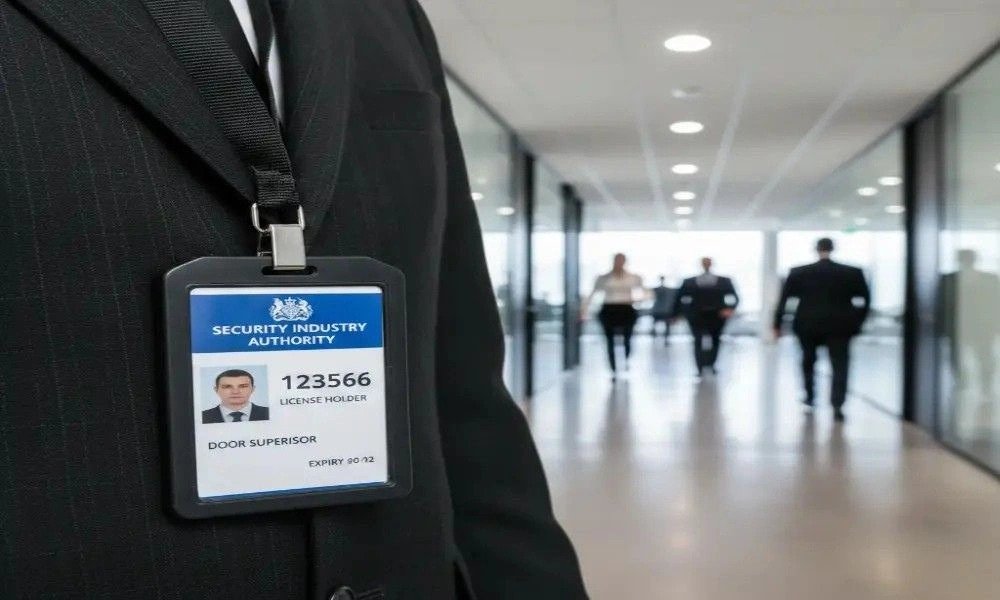
The Security Industry Authority (SIA) is the UK’s regulatory body for the private security sector. A Door Supervisor licence is legally required to work as a physical presence on licensed premises — pubs, nightclubs, events, casinos, and similar venues. It is among the most recognised and widely respected entry credentials in the industry.
Obtaining the licence involves completing a Level 2 Award for Door Supervisors from a recognised awarding body, such as Trident Awards, BTEC, City & Guilds, or Highfield, which covers first aid, physical intervention, conflict management, and legal frameworks. This training is rigorous and deliberately so — it establishes a professional baseline that employers trust.
FAST FACT
The SIA Door Supervisor licence is also the only single licence that covers both door supervision and security guarding, making it one of the most versatile entry points into the profession — effectively giving you two roles for the price of one qualification.
The First Prologue: Building Foundations on the Door Supervisor Licence
Most Door Supervisors begin their career working in venues in evenings and weekends, often alongside existing employment or studies. This period — typically the first one to three years — is where foundational professional instincts are built: reading a crowd, de-escalating confrontation, coordinating with venue management and police, and applying first aid under real conditions.
These are not soft skills. They are battlefield-tested competencies that command respect and a salary premium as a career progresses. Officers who treat this period seriously — by keeping logs, seeking feedback, and expanding their first-aid certificates — position themselves ahead of peers on the first rung.
Core skills developed in the early years:
- Conflict Management & De-escalation — Expert level — the bread and butter of door work, applicable to every security role.
- Emergency First Aid Response — Advanced proficiency gained through real-world application under pressure.
- Situational Awareness & Risk Reading — Expert-level crowd and environment reading developed through daily practice.
- Communication & Team Coordination — Advanced skills in liaising with colleagues, management, and emergency services.
- Legal Frameworks & Powers of Entry — Proficient understanding of law, licensing conditions, and use of force.
The Career Pathways from the SIA Door Supervisor Security Licence
The SIA Door Supervisor qualification is not an island — it sits at the centre of a web of career directions, each offering distinct challenges, salary bands, and professional identities. Below are the most common and rewarding pathways taken by ambitious officers.
- Senior Door Supervisor / Head of Security
The natural first promotion. Head Door Supervisors manage a team of officers at a venue or across multiple venues. Responsibilities expand into shift management, staff scheduling, incident reporting, and liaison with police licensing units. Salary typically increases by 15–25% over entry-level.
- Close Protection Officer (CPO)
One of the most prestigious transitions. CPOs provide personal security to high-net-worth individuals, executives, celebrities, and dignitaries. Requires an additional SIA Close Protection licence and specialised training. Highly competitive, but Door Supervisor experience provides an essential foundation.
- Corporate & Event Security Officer
Moving from venue work into corporate premises, major events (festivals, sporting events, concerts), and retail security. These roles often offer regular hours, greater stability, and direct progression into supervisory structures.
- Security Supervisor / Operations Manager
A management track for those who lean into leadership. Supervisors oversee teams across multiple sites, conduct risk assessments, liaise with clients, and ensure compliance with SIA and industry standards. Often combined with ILM or CMI management qualifications.
- Security Consultant & Risk Assessor
Senior professionals who advise organisations on physical security strategy, vulnerabilities, and compliance. This path typically requires a decade of experience and additional qualifications such as the Level 5 Award in Security Management or a Chartered Security Professional (CSyP) designation.
- SIA Security Training & Development Instructor
Experienced Door Supervisors with strong interpersonal and communication skills often move on to deliver SIA qualifications themselves. A deeply rewarding path for those who wish to shape the next generation of professionals.
A Salary Progression Path: What to Realistically Expect
Compensation in security varies significantly by role, region, specialism, and employer. The following figures reflect typical UK market ranges for 2025, compiled from industry recruitment data.
|
Door Supervisor (Entry) |
0–1 year |
£22,000 – £27,000 |
|
Senior Door Supervisor |
2–4 years |
£28,000 – £34,000 |
|
Corporate Security Officer |
2–5 years |
£28,000 – £36,000 |
|
Close Protection Officer |
3–6 years + CPO licence |
£35,000 – £65,000+ |
|
Security Supervisor |
4–7 years |
£32,000 – £42,000 |
|
Security Operations Manager |
7–12 years |
£45,000 – £60,000 |
|
Security Consultant / Director |
10+ years |
£55,000 – £90,000+ |
Additional Qualifications That Accelerate Growth
The most career-forward Door Supervisors do not wait for employers to invest in them — they proactively build their qualification portfolio. The UK security industry has a well-established framework of credentials that signal commitment and capability to employers.
Key qualifications to pursue: SIA Close Protection · SIA CCTV (Public Space) · Level 3 First Aid at Work · BTEC Level 3 Security Management · ILM Level 3 Leadership · CMI Level 5 Management · NEBOSH Health & Safety · Chartered Security Professional (CSyP)
The Chartered Security Professional designation, awarded by the Security Institute, is regarded as the pinnacle professional credential in UK security. It is achievable and worth targeting from the mid-point of a career, typically seven or more years in, with demonstrated management experience and continuous professional development.
Bright Future Prospects: A Sector on the Rise SIA Security Officer
The private security sector in the United Kingdom employs over 350,000 licensed personnel and is projected to grow steadily through the late 2020s. Several macro-trends are driving this expansion, all of which create opportunities for professionals who started their careers at the door.
Converging physical and digital security
Modern security is no longer purely physical. Organisations increasingly seek professionals who understand both traditional door supervision and digital threat landscapes — access control systems, CCTV analytics, and cyber-physical integration. Door Supervisors who add technology literacy to their portfolio will command premium roles.
Major events and the experience economy
The UK’s status as a global events destination — from Premier League fixtures to major music festivals and international summits — creates consistent, well-paid demand for experienced security professionals at every level. Event security management has become a specialism in its own right, with dedicated career tracks.
Counter-terrorism and protective security
Following the introduction of Martyn’s Law (the Protect Duty), venues and public spaces across the UK are legally required to implement enhanced security measures. This legislation has already created significant demand for trained Door Supervisors with counter-terrorism awareness (CT) training, and will continue to do so as compliance deadlines approach.
INDUSTRY INSIGHT
Martyn’s Law — named after Martyn Hett, one of the victims of the Manchester Arena attack — is expected to directly create tens of thousands of new trained security roles across the UK’s venue and hospitality sector. For qualified Door Supervisors, this represents one of the most significant sector-wide opportunities in a generation.
Qualities That Separate Good Officers from Great Ones
Technical qualifications open doors. But across interviews with senior security professionals, the traits that consistently predict long-term success are less about credentials and more about character.
- Professionalism as a non-negotiable identity
Punctuality, appearance, communication, and conduct — day in and day out. The security industry is reputation-driven. Your name travels faster than your CV.
- Continuous curiosity
The best officers read widely — about law, about risk, about human behaviour. They don’t stop learning when the licence is issued.
- Emotional intelligence
The majority of incidents are resolved verbally. Officers who can read a room and de-escalate with precision prevent harm, protect clients, and protect themselves from legal exposure.
- Reliability under pressure
Security is, at its core, a trust relationship. Those who have never let their team down, who have always shown up, are the professionals who receive the calls when high-value contracts are awarded.
“In this industry, your reputation is built slowly and lost quickly. Guard it with the same diligence you guard everything else.”
Self-Employment and Running Your Own Firm in the SIA Security Industry
A significant number of experienced Door Supervisors eventually move into self-employment — either as sole traders offering specialist services such as close protection or consultancy, or by building their own security companies. The barrier to starting a small security firm is lower than in many sectors, but the compliance requirements are rigorous: robust public liability insurance, contract management, and HR processes are essential from day one.
Those who succeed in building security businesses tend to do so on the back of deep client relationships built over years of front-line service — a reminder that every door assignment is, ultimately, a networking opportunity.
Getting Started: A Practical Next Step
If you are currently in the first years of your Door Supervisor career and wondering whether real progression is possible, the answer is unambiguous: yes, and at every level of ambition. The route from Day 1 to Director is well-trodden. What distinguishes those who complete the journey is intention, consistency, and the willingness to invest in themselves as professionals.
Start with your next qualification. Assess where you want to be in five years. Tell the people above you what your ambitions are. The security industry rewards those who take it seriously.
Latest Post